
The consequences of the Trojan War stretched over decades and distance. When the king of Crete finally did return home from the battles at Troy, solitary and shipwrecked, he was foresworn to Neptune for saving his life. That vow—to sacrifice the first person he saw—along with the injustices of that war, come together dramatically in Mozart’s great opera seria Idomeneo.
The Boston Baroque orchestra, chorus and a half-dozen soloists, led by conductor David Bates and focused by Bill Barclay’s insightful direction, semi-staged King Idomeneo’s return home and its repercussions April 24, playing on period instruments and singing in Italian, at the Emerson Paramount Center.
Each of Idomeneo’s principals, disrupted by war and forced promises, stands wounded and defiant, whether concealing their pain or acting out. These are no mere mortals at the hands of implacable gods, and their interlocked stories are driven forward with anguished intensity.
A dozen engaging arias, some luridly evocative, were woven into long stretches of demanding coloratura and fascinating settings of recitative, both secco (harpsichord/continuo alone) and accompanied, underscoring emotional shifts. Arias meant to further the story, not simply to show off vocal talent, were the norm, like Elettra’s “Tutte nel cor vi sento furie del cupo averno” (I can feel you all in my heart, furies of the dark hell),” which erupts with empathetic turmoil into an instrumental storm.
The plot moves briskly; emotions are real, and run deep. Idamante, unwittingly victimized by his father’s promise to Neptune, searches for explanations. Elettra, balancing her hatred from the killing of her father with love for his murderer’s son, teeters on the brink of explosion. Ilia sublimates the desire to avenge her dead father Priam, so great is her hope for Idamante’s love. And King Idomeneo mourns his choices, searching for alternatives. When the Idomeneo’s deus-ex-machina does arrive, it’s not to render phony justice, but simply to acknowledge everyone’s innocence.
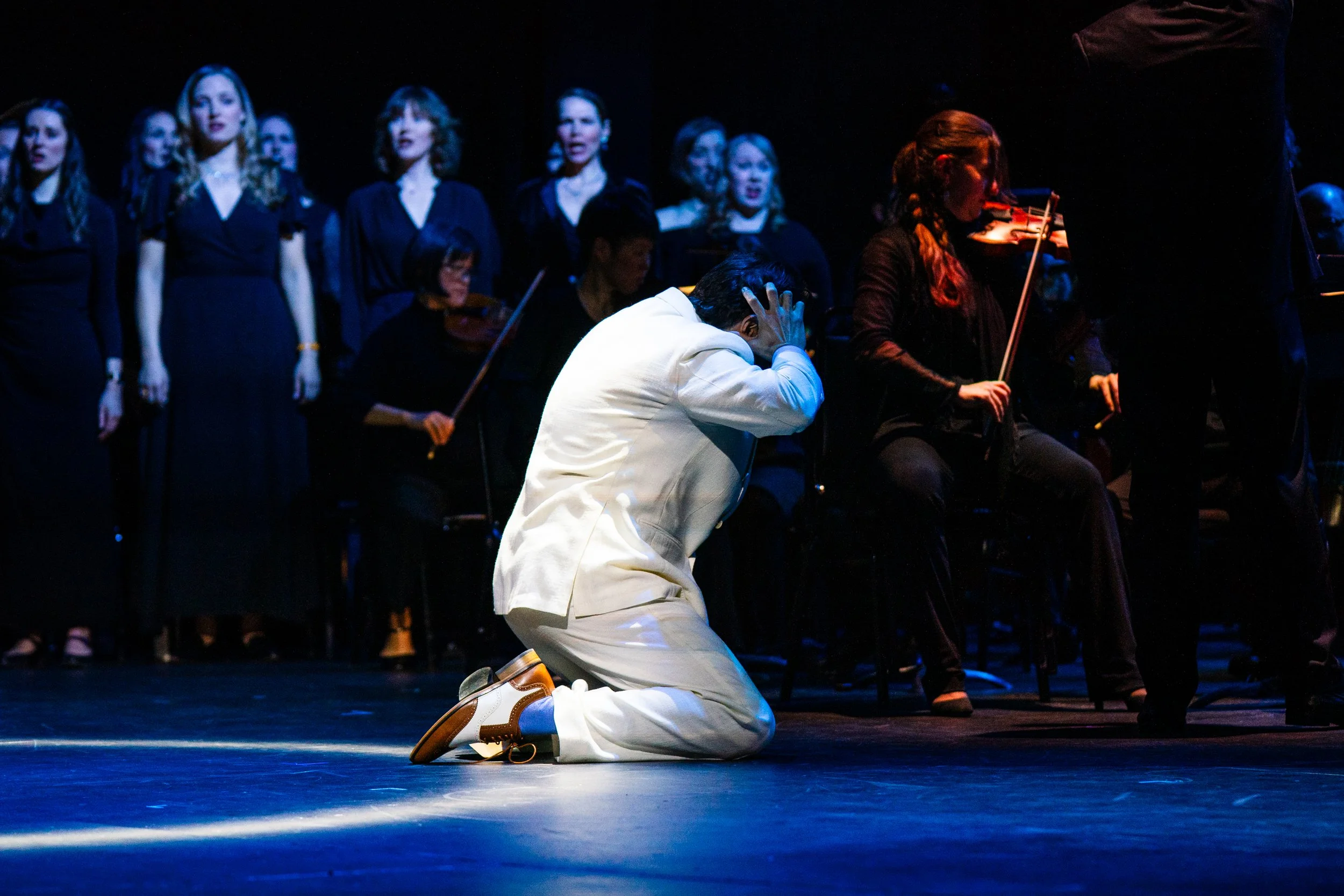
Tenor David Portillo embraced the demanding title role, and mezzo Valerie Eickhoff sang in the trouser role of his son Idamante, doomed from first sight. Eickhoff sang convincingly: “No, la morte io non pavento” (“No, I am not afraid of dying”), a late aria, stood out for its authority. Lyric soprano Hera Hyesang Park, singing with ease and power, presented Ilia with poise, subtly cloaking her own ambivalent motives before shifting abruptly to anguish. Soprano Aviva Fortunata (Elettra) sang demonstrably with rage and venom in several memorable scenes. Tenor Omar Najmi (Arbace) and baritone Joel Clemens (various) sang and acted in appropriate support.
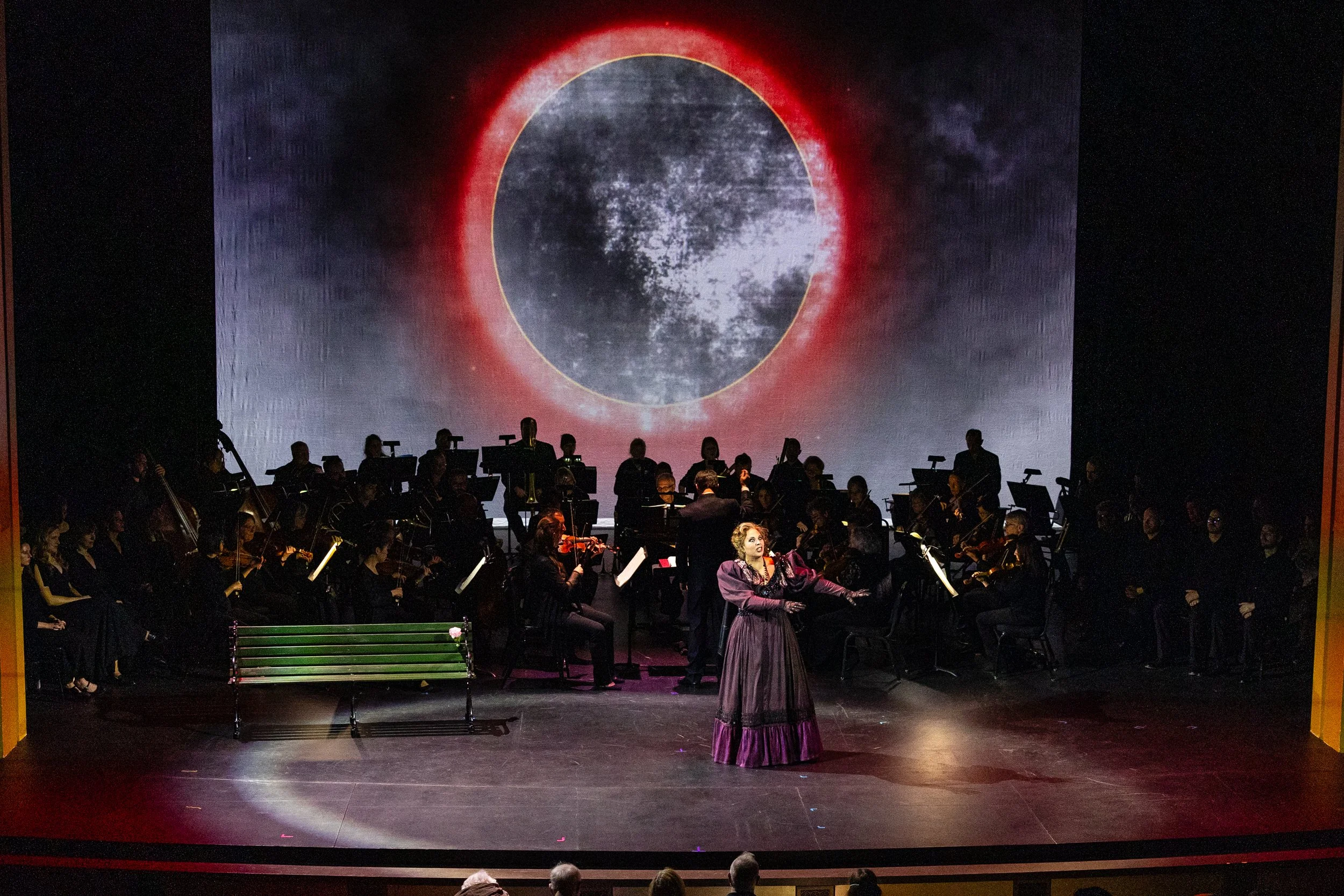
Barclay’s direction showed sparse intentions. With everything in service of the drama, and the music in nonstop interaction, his minimalist staging and properties were more than sufficient. His conception was calm, unfussy, and focused on the singers and their visual presentation. As actors the ensemble excelled, moving organically through Barclay’s careful blocking.
The ballet interlude that Mozart wrote for Idomeneo is rarely performed; still, Barclay treated the stage, actors and properties with the visual intensity of a ballet. Deliberate movements and subtle properties—parts of Idomeneo’s wartime wardrobe, Ilia’s dropped rose—led to slowly changing tableaux vivants.
David Bates, the most recent conductor to audition in the year-long search to replace retired Boston Baroque founder Martin Pearlman, kept multiple demands in control. It was an active affair, with onstage instrumentalists, choristers and soloists surrounding the conductor, who stood directly centerstage. The antics belied his steady Mozart hand; this dense score shifts and turns around the anguish of the characters, and the orchestra played with near ferocity at times. The orchestra blended sonically and balanced singers evenly, performing a textured accompaniment with decisive interludes and many dramatic settings.
A computerized backdrop was a simply huge screen-saver of nature pictures, just as interesting as that sounds. That, with some unruly recorded thunder, were only small matters that could not deter from this excellent presentation.
Top: Idomeneo (tenor David Portillo) realizes his fate; below: Elettra (soprano Aviva Fortunata) searches for answers in exile. Robert Torres photographs