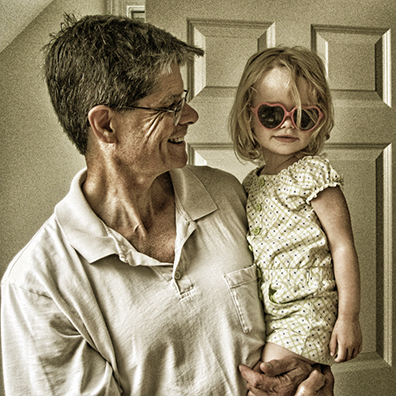

Composer Maya Miro Johnson shakes hands with Ariel Mo, who performed Miro Johnson’s bruises (disambiguation) with August Baik (right) July 26 in Ozawa Hall. Gabriel Scott photograph
There’s something simple about music-making. Musicians take the stage, and play.
No CEOs onstage. No board presidents. No intrigue. Just musicians making music.
And when the Tanglewood Music Center Fellows perform in the annual Festival of Contemporary Music, the Boston Symphony Orchestra’s annual invitation to upstart compositions, music occupies the stage.
During FCM’s long weekend July 23–27, the TCM Fellows executed a weekend’s worth of marvels—often reaching for aesthetic, technical or theatrical excess. Conductor/composer Esa-Pekka Salonen curated this year’s festival, programming much of his own music, adding inviting glimpses into other composers.
But Tanglewood is also serving a big bowl of awkward this summer. BSO music director Andris Nelsons has been fired, the BSO musicians and audiences are in revolt, and Reinstate Nelsons yard signs dot the Berkshires. CEO Chad Smith continues to look like the bad guy, and Salonen’s presence adds yet another scoop of awkward. Smith and Salonen thrived together on the Los Angeles Philharmonic team in decades ago. Speculation? Yeah, it’s here.
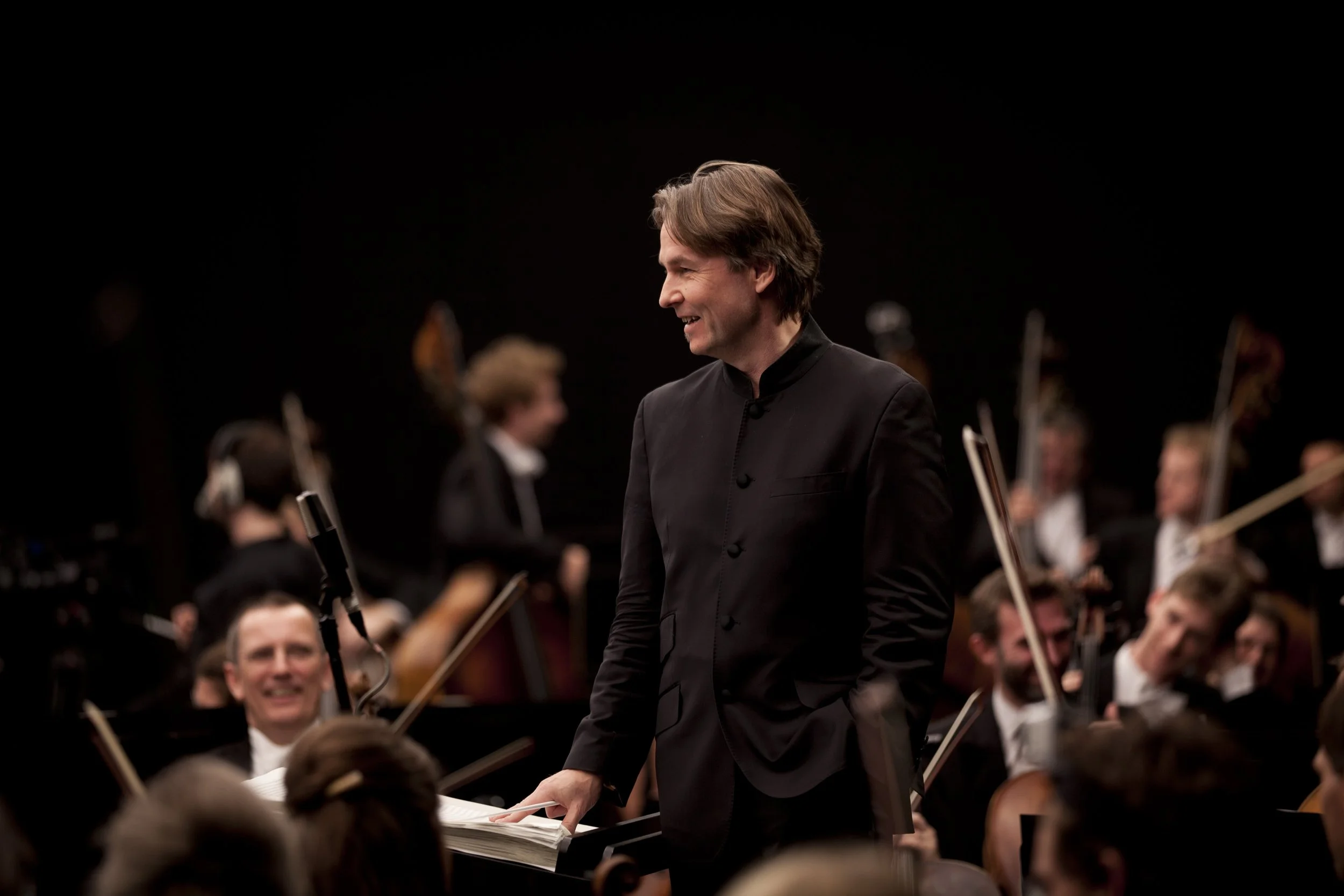
Esa-Pekka Salonen. The Finnish composer/conductor curated this summer’s Festival of Contemporary Music at Tanglewood, July 23–27. Benjamin Ealovega photograph
Salonen let his musical choices talk during FCM, and quieted any discussion with his focus.
He curated five superbly accessible programs, including a dozen rigorous new works—every single one engaging and provocative. Onstage always beats offstage, and this year’s FCM proved it.

Ariel Mo and August Baik in Miro Johnson’s bruises (disambiguation). Gabriel Scott photograph
Maya Miro Johnson’s bruises (disambiguation), for piano and piano interior, mixed innovative musical concepts with a arrow-straight device: what happens when you age. Treating the melody and the instrument like the human body, a duet offered a tune and slowly battered it. bruises had August Baik and Ariel Mo play the melody and then damage it—Baik stood alongside, peppering the piano with ping-pong balls, mallets, his hands, and dampening it with a scarf. Some theatrics pursued the theme as well: bruises heal, but things change. As they played, the melody suffered more and more. The concept and performance were touchingly effective.
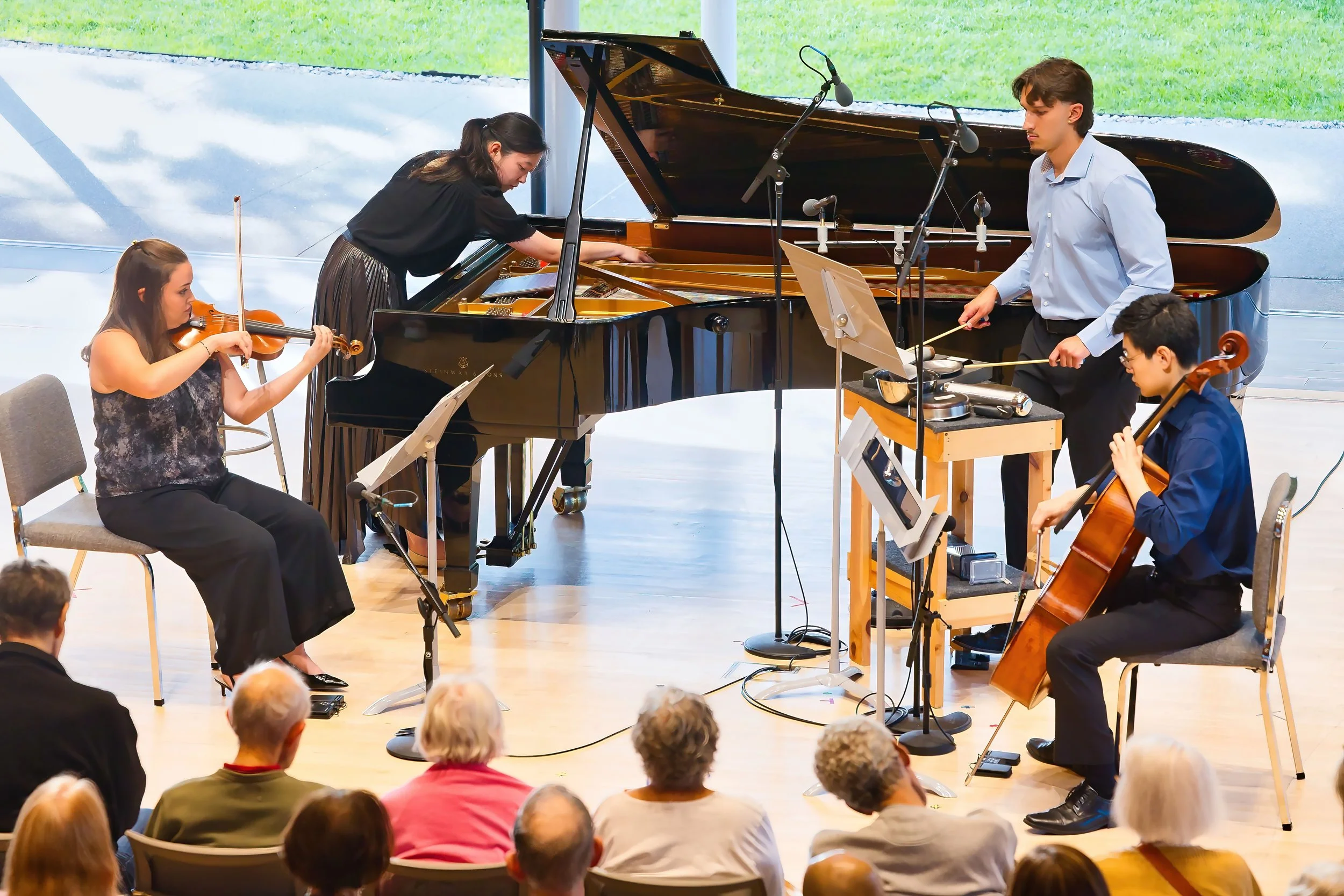
From left top: Hannah Corbett, violin; Cameron Akioka, piano; Dillon Akerman, percussion; Han Lee, cello, perform Gabriella Smith’s Anthozoa in the Linde Center at Tanglewood. Hilary Scott photograph
Gabriella Smith’s Anthozoa had Kronos Quartet energy: world-music influences, alternate techniques, utilizing instruments in all the ways they can make sound. This foursome—piano trio with percussion—-was heavily percussive, with a moving deep groove, all inspired from underwater field recordings. Smith, an active naturalist, made recordings of coral reefs with a mike dangling from a surfboard.
Alisson Kruusmaa’s Mesmerism was tasty miniature for marimba and piano, two instruments that blend together sweetly. That blend made the instruments morph into one sound, with the blurring enhancing the hypnotic intent. Kruusmaa’s wasn’t the only quiet, inward-looking piece. Hannah Ishizaki piano trio Float/Shake, reveling in dance rhythms, worked splendidly, featuring lots of pizzicato and piano plucking.
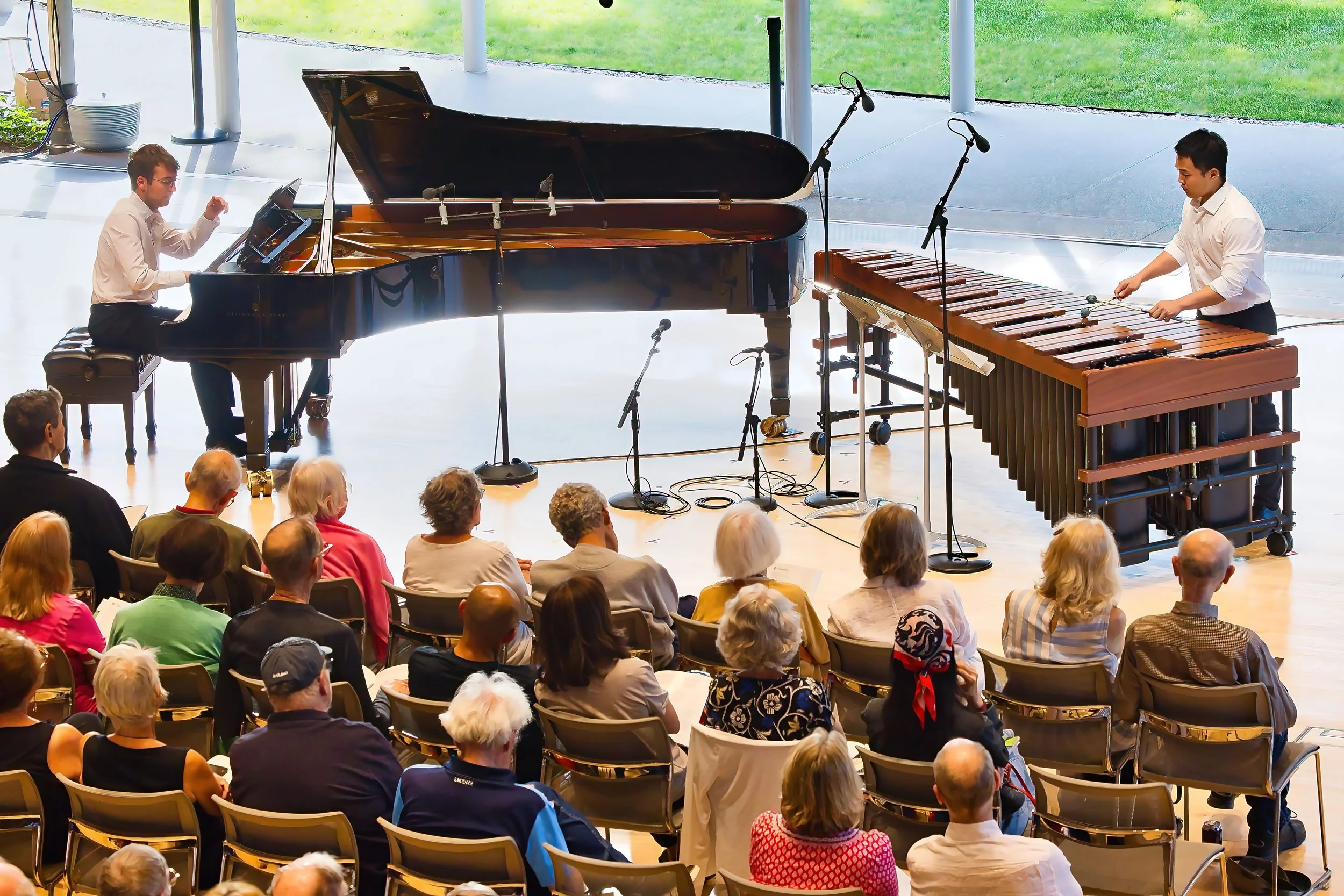
Roy Ranen, piano, and Harry Yihao Zhang, marimba, perform Mesmerism by Alisson Kruusmaa, July 25 in the Linde Center. Hilary Scott photograph
Anna Berg’s string quintet, remnants of confetti unexploded, used Webern-like miniatures and mosquito textures to dabble in various forms, leaving them mostly incomplete; it ends in a five-voice fugue figure that only gets to three. Nico Muhly’s pristine arrangements of two William Byrd motets will be played by generations, as they were beautifully by this generation.
Music from Salonen and his Nordic counterparts peppered the programs. Hans Abrahamsen’s let me tell you, with Lauren Smith conducting and featuring luminous soprano Alexandra Henderson, is an atmospheric soundscape for voice and orchestra. A voice-as-instrument setting quietly forms the story of Ophelia into existence. Henderson sang each of the three demanding movements in deep poetic character.
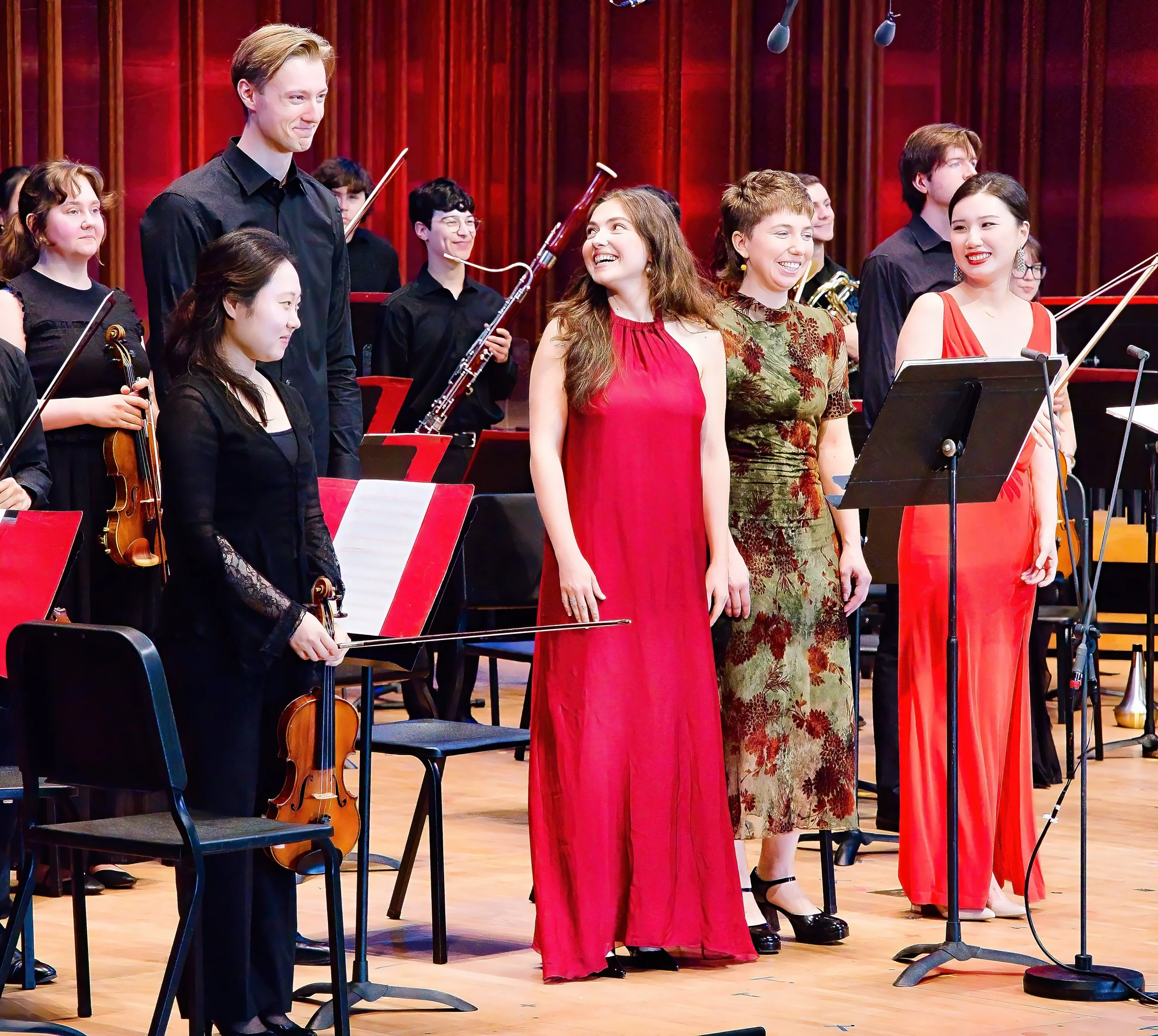
Conductor Julian Gilewski with TMC Vocal Fellows Diana Agasian, Eden Bartholomew, and Ya Gao, after performing Lutoslawski’s Chantefleurs et Chantefables, July 26 in Ozawa Hall. Hilary Scott photograph
Mature works by Hillborg, Saariaho, Lindberg, Ligeti (a fascinating ’70s piece, Melodien), and Lutoslawski (a late character piece, Chantefleur et Chantefables) were performed. Salonen included four settings of poet A.R. Ammons by Steven Stucky, a frequent collaborator in Los Angeles. Two sturdy and characterful baritones, Fellows Holden Turner and Raphaël Laden-Guindon, realized the poems.
Salonen’s own works fascinated. He conducted his cello concerto, a virtuosic turn for Finnish cellist Senja Rummukainen and electronics. Other works by Salonen had far-flung roots: Saltat sobrius, a theme treatment taken from medieval polyphonist Pérotin; Fog, a fantasia on the Prelude to Bach’s Partita in E, which Matthew Cohn performed dramatically from the upper mezzanine in Ozawa Hall.
Arabesques for Olly (a remembrance of longtime Tanglewood mentor, composer Oliver Knussen), also worked beautifully with violin drone Isabel Tannenbaum alone in the balcony, and cellist Han Lee centerstage, playing with surprisingly engagement to drone.
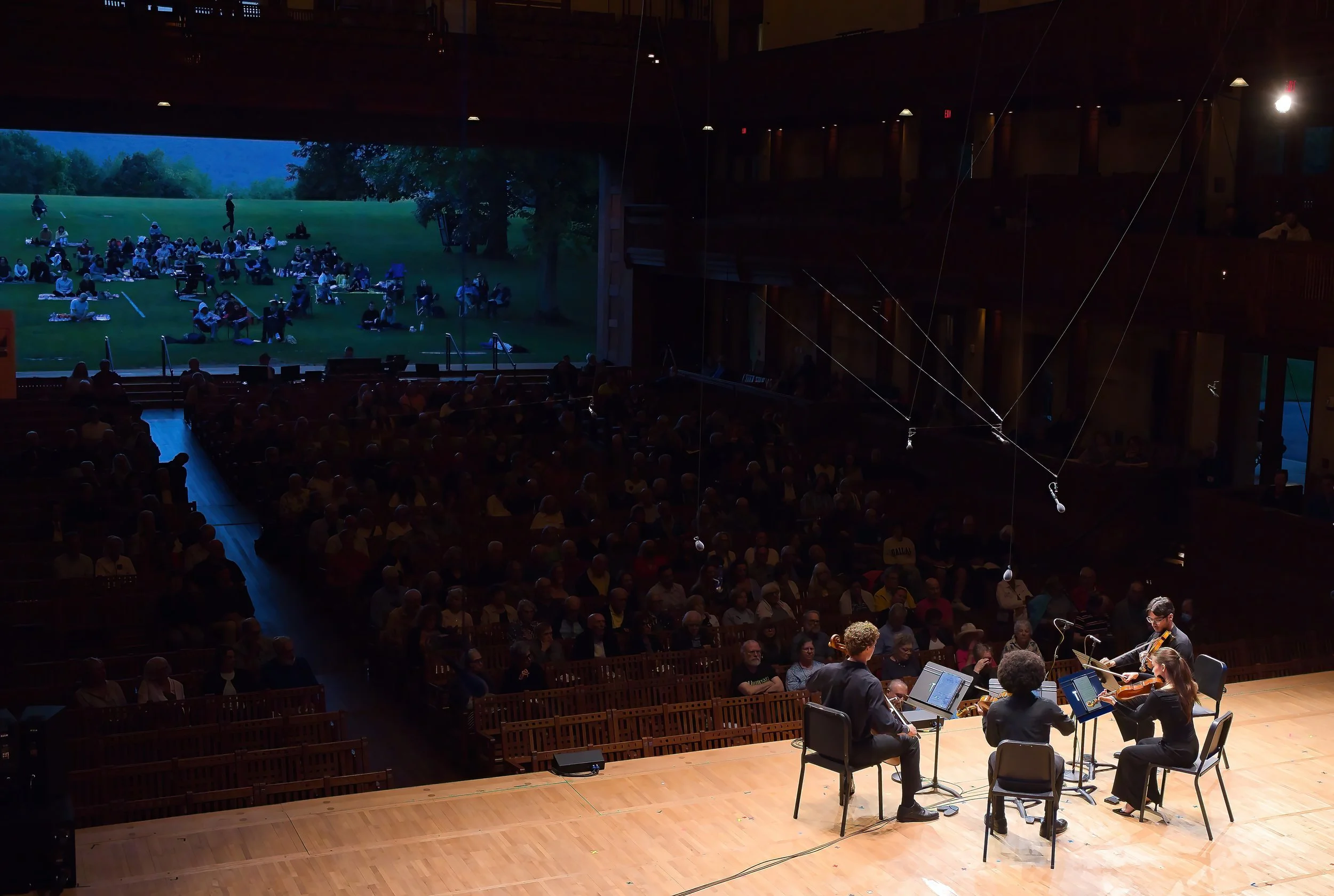
From top left: Evan Nicholson, Nazeeh Shahid, Erina Buchholz, and Miles Huang, playing Kaija Saariaho’s Terra Memoria in Ozawa Hall. Hilary Scott photograph
FCM began in the 1950s, rooted in adventurous music-making from the beginning. Salonen’s curation of FCM avoided an abundance of “ink still wet” compositions, replacing many of those choices with living but established composers, including himself. But the flavor of FCM—make noise in any possible way—and its value as a snapshot of music here-and-now, remains.
The Boston Symphony Orchestra is defined by traditions, and the recognition FCM brings to active composers and musicians is one of those traditions.—Keith Powers
Originally from Classical Voice North America.