
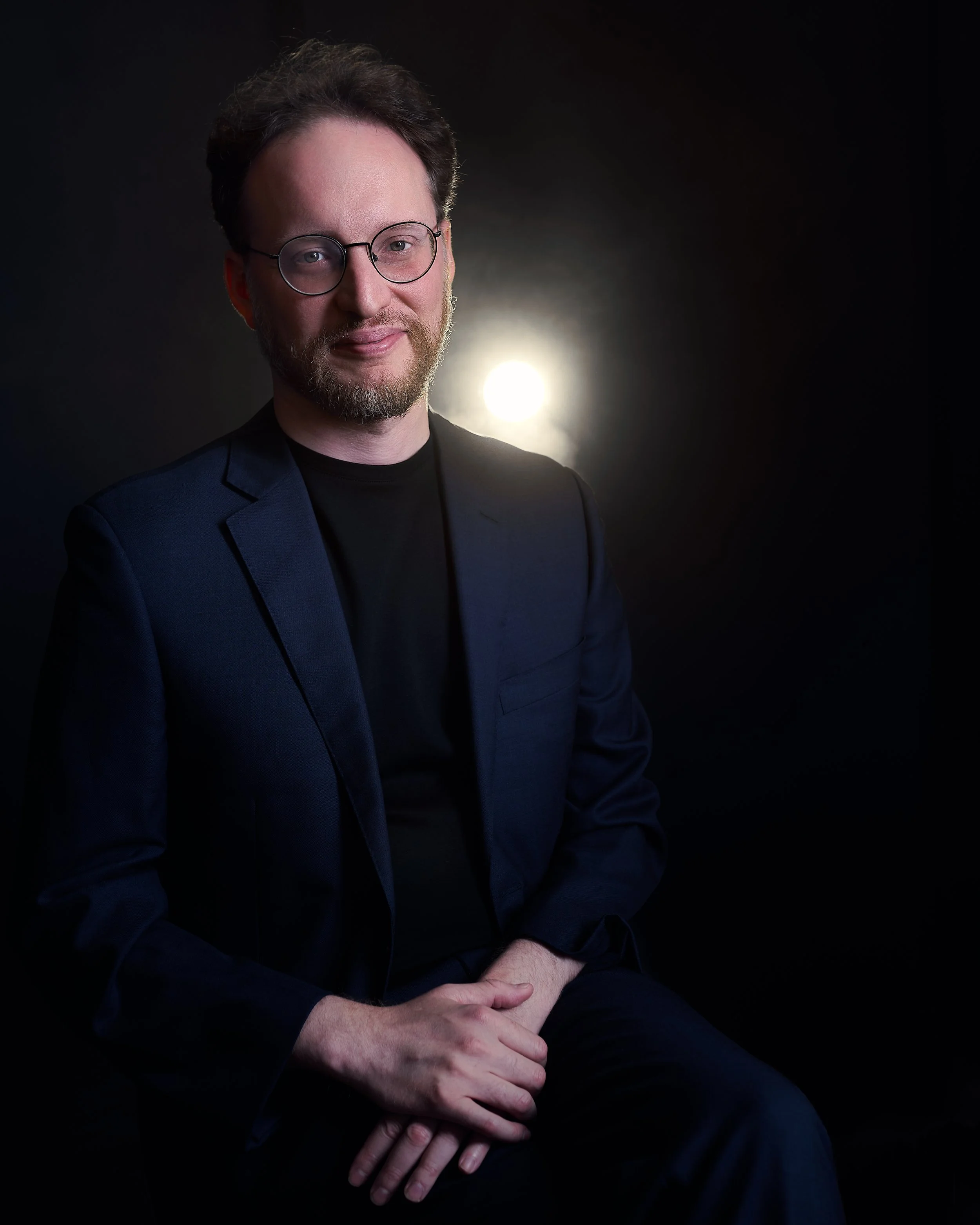
Composer Eric Nathan. Toby Oft photograph
Mimicking nature itself, the pastoral in music makes fluid shapes. Beethoven’s seminal Pastoral Symphony revels in realism, with portrayals of picnickers, birdsong, thunderstorms, and rustic celebration. In Eric Nathan’s Violin Concerto, premiered Sept. 19 by the Rhode Island Philharmonic in its season-opening concert, the pastoral blends with human nature as well: The rugged ascent to a mountaintop is envisioned equally as a collective challenge. Music director Ruth Reinhardt conducted both works, along with Samuel Barber’s School for Scandal overture, in Providence’s VETS Auditorium.
Nathan’s robust premiere was the centerpiece. “The Mountains We Climb,” the composer’s first violin concerto, is a half-hour parry-and-thrust between formidable soloist Yevgeny Kutik and the orchestra.
Its origins flow from quiet New Year’s gathering: Nathan’s international guests did not know Auld Lang Syne, and he picked out Amazing Grace on the piano instead. They lingered in thought on the last lines: “I was blind, but now I see.” It became an apt comparison both to the challenges of climbing and to the revelatory moment of reaching the summit. Orchestra and soloist trade ideas about those revelations throughout the half-hour journey.
The three substantial movements begin with an extended orchestral introduction, which showcases the work’s signature technique, a sweeping swoosh that the conductor directs from left to right across the orchestra. The swoosh— realized with a mixture of blowing, bowing and percussive techniques—invokes not only the vista, but the shifting challenges.
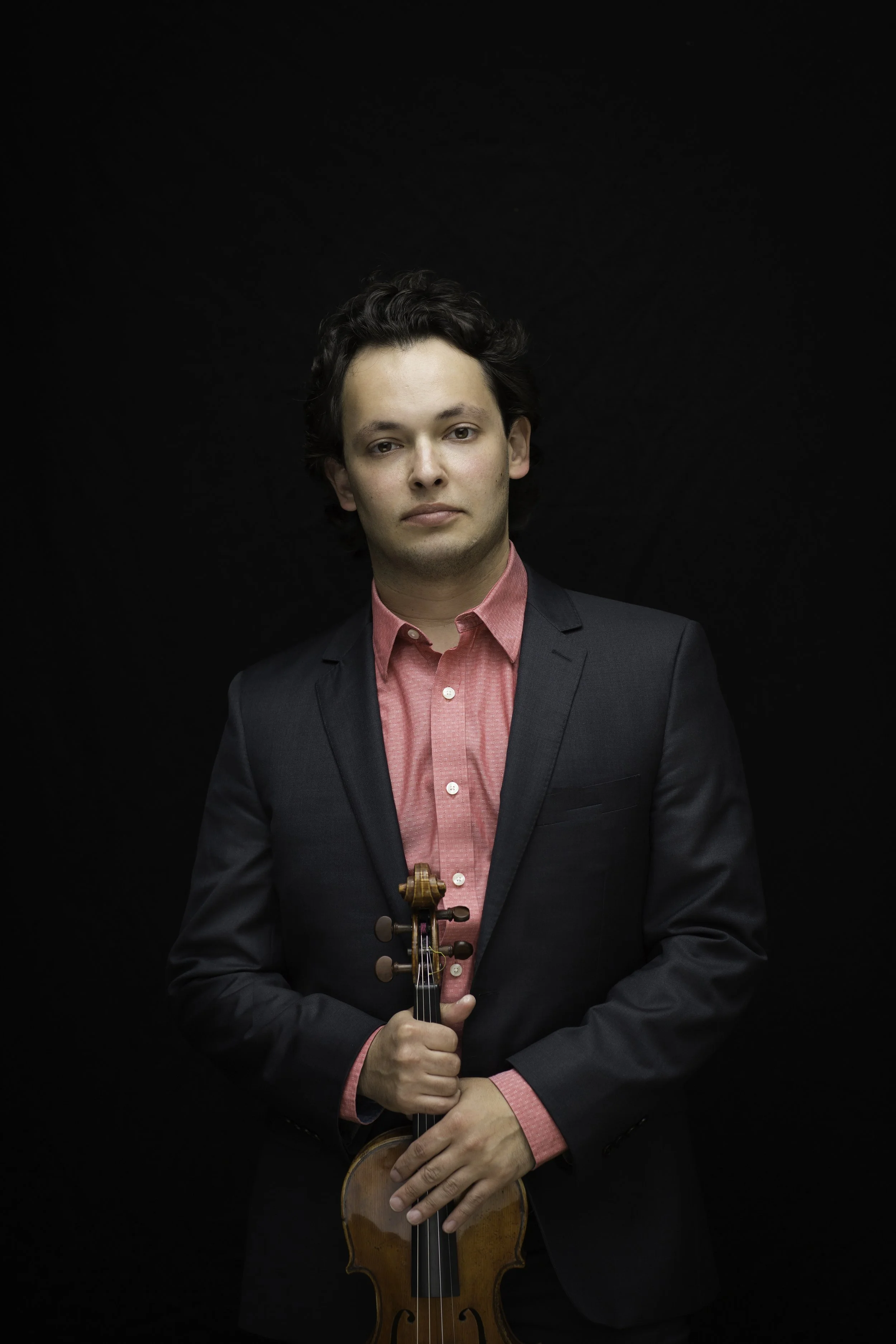
Violinist Yevgeny Kutik, one of three violinists (Stefan Jackiw, Curtis Stewart) who will premiere Eric Nathan’s The Mountains We Climb over the next season. Corey Hayes photograph
Soloist and orchestra stay perpetually active, save for the expansive orchestral introduction, which offers a questioning brass melody. The soloist eventually enters, takes up the meandering melody but fractures it, shortening the phrases into staccato utterances. It’s an indication of how the piece will unfold, through interplay and alteration—learning from each other, leaning on each other. Kutik unfolded virtuosic lines with almost casual aplomb, listening and responding.
Nathan labels the movements as three Acts, underscoring the concerto’s narrative and theatrical aesthetic. Act I leans heavily on collaboration; the movement ends with soloist and orchestra diminishing to ppp. Act II opens in the same tempo, but strays minor rather than major. The journey to the summit takes on a darker tinge, and uncertainty of success.
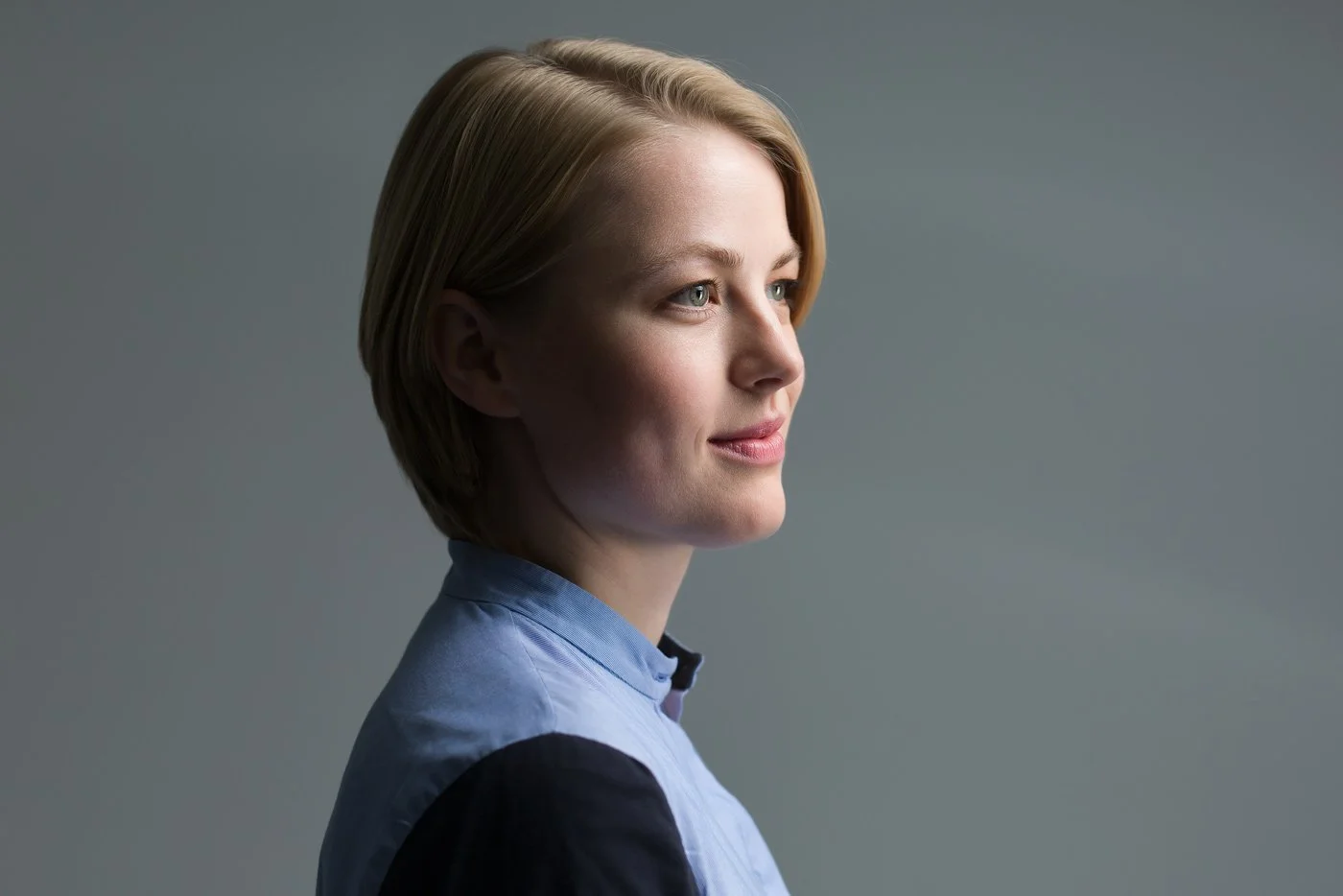
Rhode Island Philharmonic music director Ruth Reinhardt, in her second season with the orchestra. Jessica Schaefer photograph
Cadenza-like passages are common in each movement, perhaps half-a-dozen, with the orchestra adding unobtrusive drone underpinnings to Kutik’s excursions. But in Act III, perhaps as the mountaintop has been reached and the perspective is being appreciated, an oboe (Cheryl Bishkoff) offers another idea, and the soloist takes it up and embarks on an unaccompanied cadenza. Kutik searched the fingerboard until finally an inkling of “Amazing Grace” emerged. The familiar hints left a sense of tranquillity, and understanding.
A boldly played premiere with a deftly rendered Beethoven symphony form an excellent programming nucleus. The German-born Reinhardt is in her second season with the RI Phil, and it seems a fruitful match. Beethoven’s Symphony No. 6 presents challenges, despite its emotional accessibility and familiarity: its vivid portrayals demand unflagging attention. Reinhardt worked strictly to the tempo, hardly skipping a beat or an entrance cue, using an natural gesture vocabulary that facilitated understanding. This performance rode the strength of Reinhardt’s own enthusiastic maintenance of musical tension.
As in the concerto, the horns and winds proved to be the orchestral strength, with both works sharing musical love with the back of the stage. At times the string sections missed conveying the unified sound that the characterful score demands, notably in the third movement, when Beethoven gathers the merry picnickers before the storm. A few rests in the same movement could have been stuck, for more deliberate intention.
The evening began with Samuel Barber’s first major work, his School for Scandal overture. Barber explores two themes, the second also featuring probing solos scattered through the winds. In just a few minutes of urbane music-making the witty complications of Sheridan’s 18th century comedy of intrigue filled the hall. Can we bring Barber back?
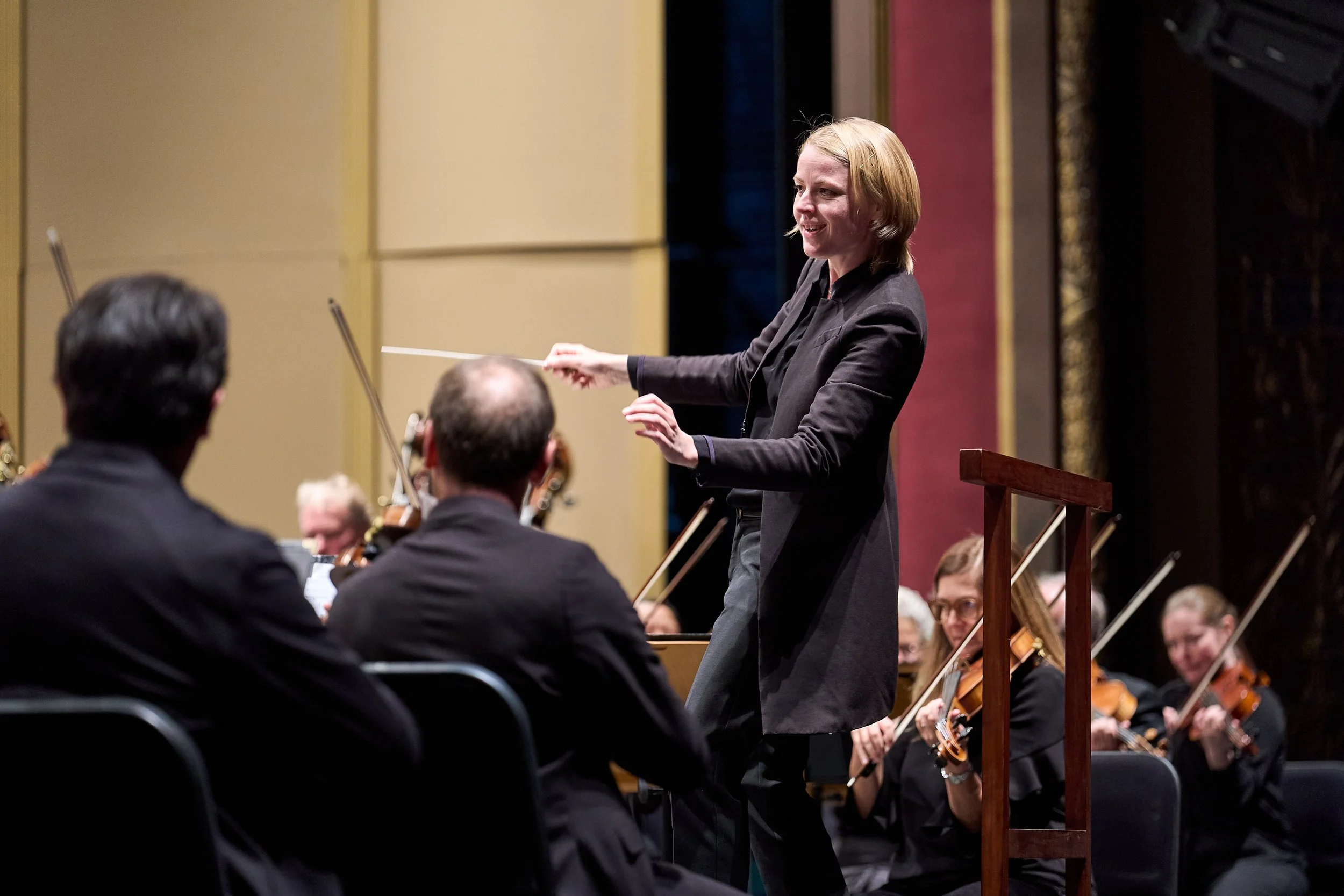
The orchestra onstage with music director Ruth Reinhardt in a 2025 performance. The RI Phil is one of eight orchestras in the commissioning consortium for Nathan’s concerto. Rob Davidson photograph
Eric Nathan’s concerto commission includes eight regional orchestras and two additional soloists (Stefan Jackiw and Curtis Stewart), who will eventually premiere the work nationally during the next season. The concerto also marks the beginning of Nathan’s three-year appointment as the RI Phil’s composer-in-residence. Future seasons will see Nathan write a symphony for the ensemble, as well as a Requiem, featuring cello soloist Zlatomir Fung.
The Rhode Island Philharmonic, Ruth Reinhardt conducting, with soloist Yevgeny Kutik, performing Barber, Nathan and Beethoven, Sept. 19 in the VETS Auditorium in Providence.