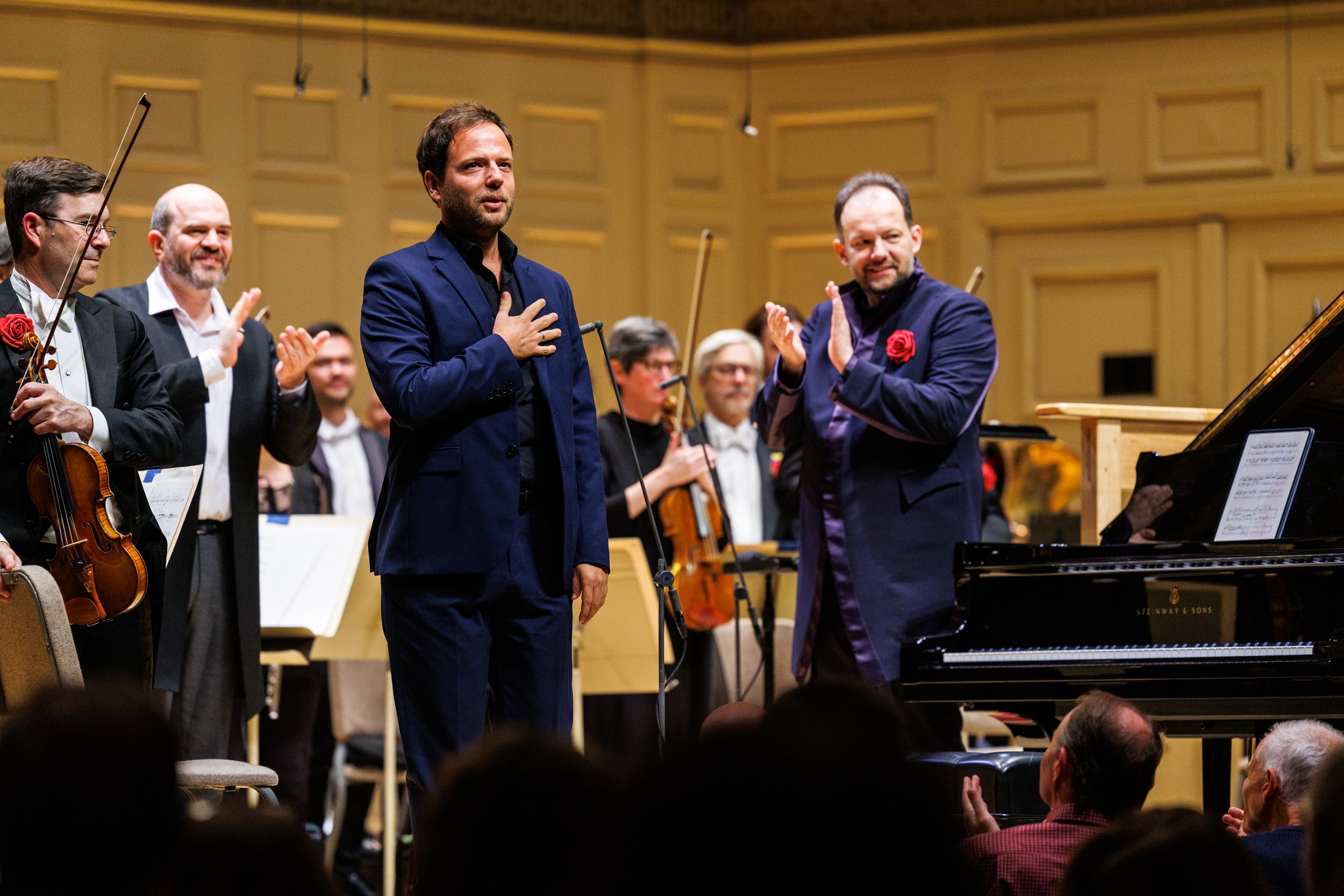
Spanish composer Francisco Coll acknowledges enthusiastic applause after the premiere of his piano concerto (soloist Kirill Gerstein stands behind Coll, at left) with Andris Nelsons and the Boston Symphony Orchestra, Oct. 8, 2026 in Symphony Hall. Robert Torres photograph
October brought a bunch of premieres to Boston, as will November. I am lucky enough to be assigned to three of them—including Tod Machover’s AI enhanced Concerto for Orchestra, which is already reviewed on this site, and at Classical Voice North America. I’ll be covering Osvaldo Golijov’s Creation, also at the BSO, for CVNA later this month. And a premiere by Anthony De Ritis, along with music by Aucoin, Barber and Wuorinen, at Boston Modern Orchestra Project this weekend.
That’s plenty of nice assignments, but I also missed out covering a few premieres. I heard Francisco Coll’s piano concerto with the BSO in October, and that substantial work offered plenty to think about. I missed Carlos Simon’s double concerto for Hilary Hahn and Seth Parker Woods at the BSO entirely. That’s a personal disappointment; losing a chance to absorb Simon’s voice in yet another way, as it accumulates through his tenure as composer-in-residence at the BSO.
Coll’s piano concerto with Kirill Gertstein at the BSO was part of a sensational performance. It was bracketed by Beethoven: the Coriolan Overture, and the Seventh Symphony. Gerstein brought his usual over-the-top brilliance to the concerto, which was boisterously received for a premiere (a healthy ripple of applause after the first movement swept through the audience). The virtuosic enthusiasm that pervaded the Beethoven Seventh made the evening thoroughly compelling: the orchestra and Andris Nelsons, avoiding the pitfalls of familiarity, nailed the piece from the get-go. With frequent orchestra watching, you can tell when the ensemble has a good day. Conversely, it did not seem that the orchestra played Tod Machover’s premiere with conviction, or enthusiasm, something I alluded to in the review.

Silvana Estrada performs with the Boston Pops during a Día de Muertos concert Oct. 29 in Symphony Hall. Robert Torres photograph
Día de Muertos came to Symphony Hall again, becoming an annual Pops tradition on Halloween weekend. I’m always happy to see Keith Lockhart conduct the Pops, if only for the organizational gymnastics he goes through on the podium. It’s always something, usually extra-musical —Santa Claus, pop stars with attitude, Star Wars cosplay, rock bands that have trouble counting. This concert was simply fun entertainment: Mexican music from Veronica Robles, Boston’s mariachi legend; young pop singer Silvana Estrada; and after intermission (I missed this) the ensemble Enjambre. The room was packed full of families and south-of-the-border energy.
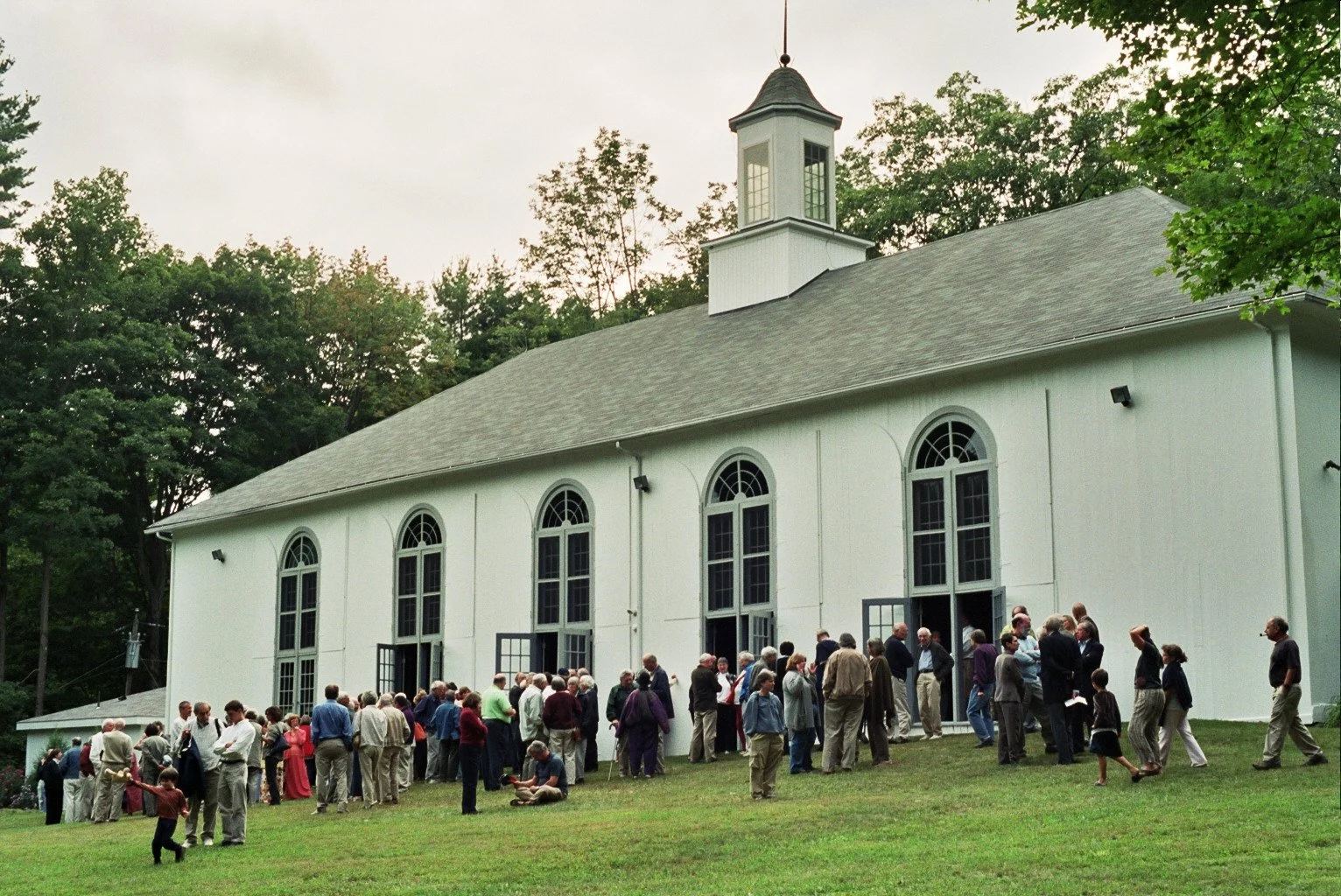
Home of South Mountain Concerts in Pittsfield, MA. Concerts run for five Sundays in September, and have for more than a century. A modest chapel-style venue on a hill in the woods, the programs are now directed artistically by David Finckel and Wu Han.
I spent the summer traveling to different chamber music festivals. Perhaps I’ve been looking for a broader way to write informatively about festivals and their differences, but that’s slow to develop. My personal highlight this year was a trip to Menlo, CA, for Music@Menlo, a teaching festival with main-stage performances as well. Cellist David Finckel and pianist Wu Han were spending their final summer in Menlo as directors of the festival they founded; I had been there near the beginning of their tenure, and the return trip was poignant.
The duo is leaving Menlo, but taking on artistic leadership at the South Mountain Concerts in Pittsfield, MA, which run five Sundays beginning in September. Although I’ve been to Tanglewood most summers, I’ve never been to SMC, a venerable chamber-music destination founded in 1918 by Elizabeth Sprague Coolidge.
Coolidge is pictured here, as is the hilltop venue. Finckel and Wu Han performed in the final concert of the brief season, the two late Schubert trios with violinist Benjamin Beilman. I had seen the same program in Rockport earlier this summer, and that performance is reviewed here on Leonore Overture.
Coolidge was a great chamber music patron, someone who loved the repertoire enough to do whatever she could to infuse it with possibilities. She commissioned major works, and built this venue and capitalized it. More than 400 people in a dark chapel on a rainy Sunday felt like proof enough of her success.
When it comes to traditions, classical music can actively shun its roots: presenters (and their marketing people) try hard to make concerts feel newly discovered and forward-thinking. In fact, devotion to the past forms the basis of these recurring new discoveries, and if you believe that, as I do, two Schubert trios do seem newly discovered and forward-thinking.
Finckel and Wu Han might have ambitions to broaden SMC concerts. They may simply want another home for the community of musicians that they support and belong to, musicians from Menlo, from the Chamber Music Society of Lincoln Center, which they also direct, and the profound connections they’ve made during decades of performing.
Inherently, as Finckel said to his Menlo students this summer in a farewell discussion, they do it because they are soldiers for chamber music. Finckel is serious. Maintaining the existence of chamber music makes him combat-ready, and he embraces the task. Coolidge was probably built the same way, although I doubt she would characterize it with his words. Maintaining something good, something relevant—that’s change, changing the future with the past.
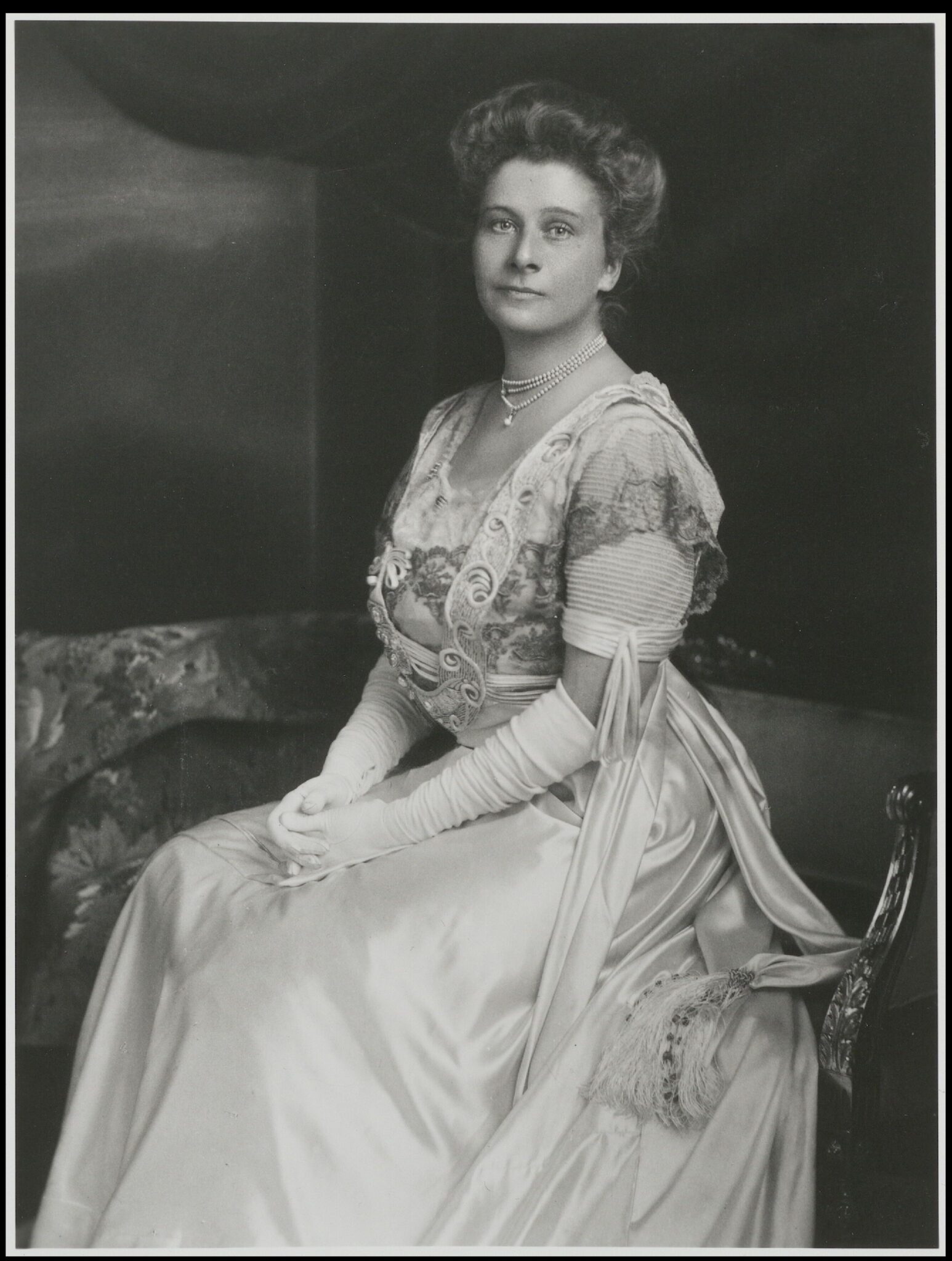
Photographic print of Elizabeth Sprague Coolidge at about 43 years of age (circa 1907), reproduced from a photograph album assembled by Nancy Atwood Sprague, mother of Elizabeth Sprague Coolidge, circa 1910. Elizabeth Sprague Coolidge Foundation Collection, Box 230, Music Division, Library of Congress.
Finally, I have seen Suzanne Jackson’s retrospective at the Museum of Fine Arts several times, and will several more. It is a genuine retrospective: multiple rooms with sequentially arranged large works, mostly decade-by-decade, beginning with the ’80s. Her early paintings are acrylic wash—similar to watercolors, but with more substance and texture on the canvas. Further along in the retrospective, Jackson shows paper-making and collage works, with a similar aesthetic. I’ll write more (and get some artwork) next month.