From CVNA: Music@Menlo founders move on, leaving musical legacy intact.
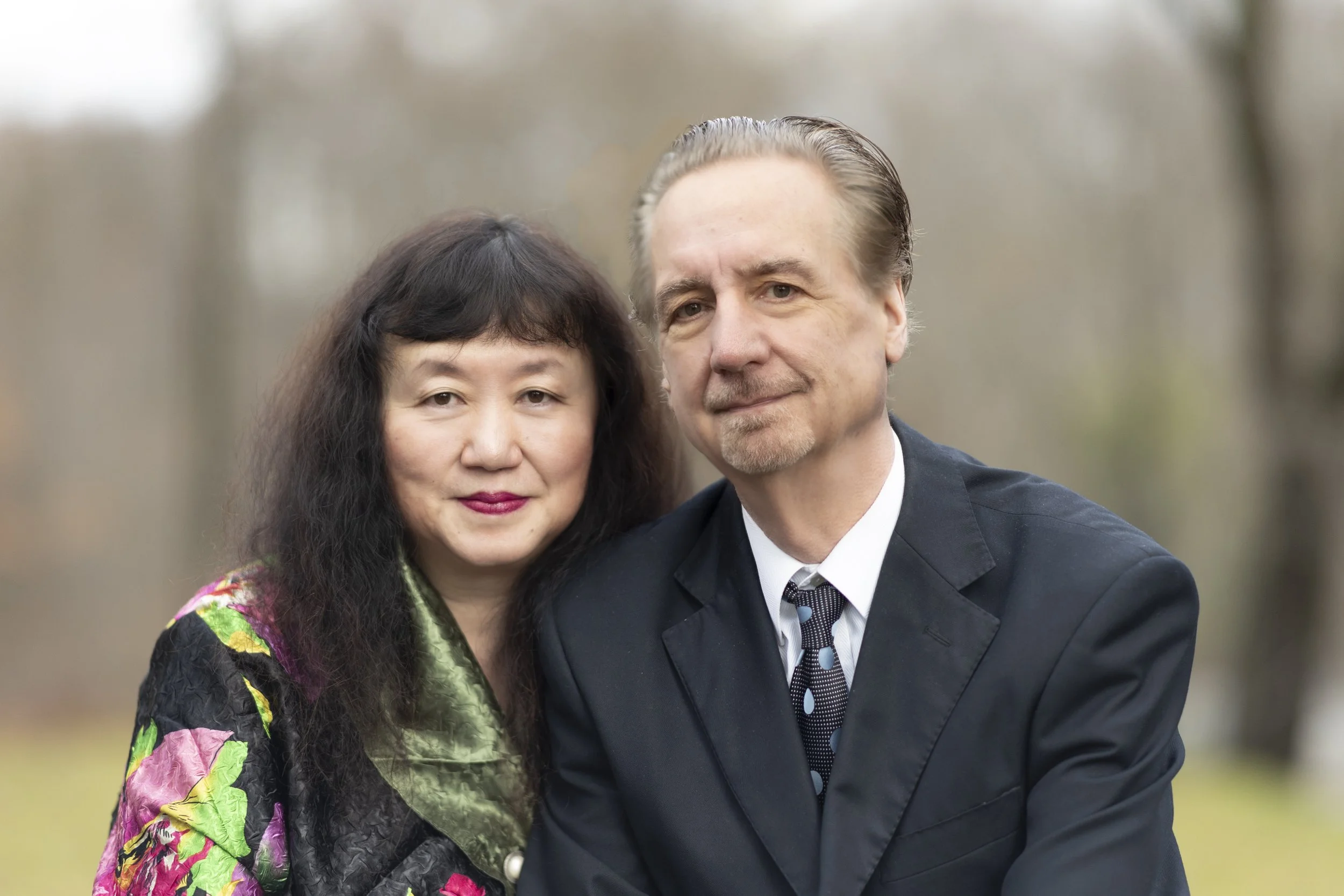
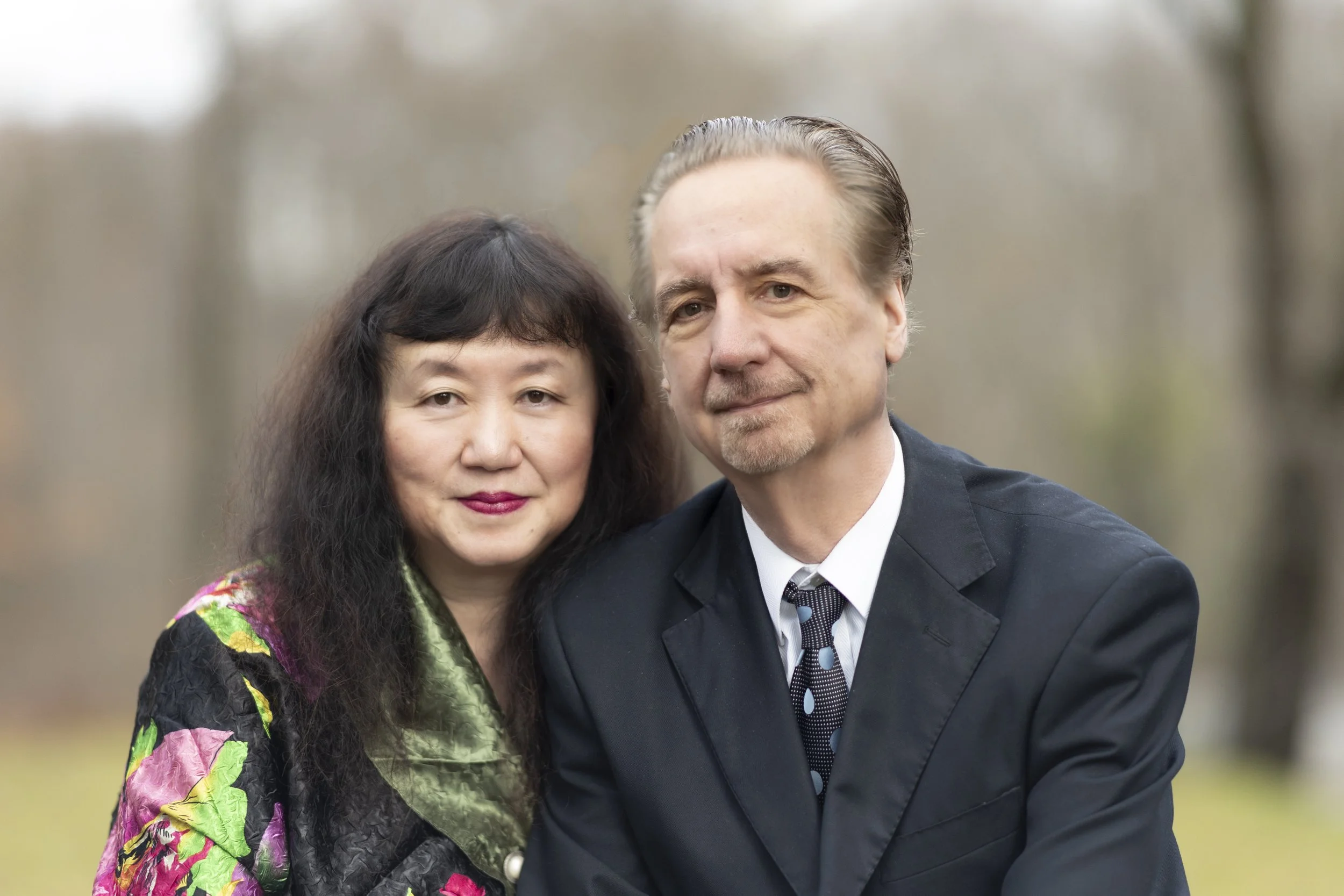
Music@Menlo co-founders, pianist Wu Han and cellist David Finckel. “Musicians can always improve,” Finckel says. “It’s a mountain, but if you reach the pinnacle you’re no longer interesting.” Mark Chen photograph
Music@Menlo reveres its past, and great performances bring it alive each summer. Visitors to the quiet campus near Palo Alto hear a swashbuckling series of concerts, presented by a blurry mix of mentors and students. Blurry from the demands: the schedule never relents in this chamber music mecca.
A quartet of preeminent violinists joined Menlo directors Wu Han and David Finckel — who will pass the leadership torch after this summer — and a dozen string and piano virtuosi for opening night’s program, The Glorious Violin, on July 18.
Arnaud Sussmann, Bella Hristova, Chad Hoopes, and Kristin Lee were soloists, but only because Vivaldi was limited to four seasons. The familiar always rewards investigation; each Vivaldi Season epitomizes the composer and itself. But not every reading has inner voices supporting everyone, and supporting each other, and finding interest in often trampled musical lines. The lower string ensemble included violin/violist Guillermo Figueroa, violist Paul Neubauer, bassist Scott Pingel, cellist Dmitri Atapine, and Hyeyeon Park on harpsichord. The playing epitomized the axiom: make old new again.
The Glorious Violin became The Glorious Kreisler after intermission, with a dozen encore-length arrangements by early 20th-century virtuoso Fritz Kreisler. It was like a pop concert: three-minute snippets, some so happy, some so sad. Kreisler’s arrangements were meant as concert closers; all together it was a program for specialists, but also a display of interpretation.
The players rotated — Sussmann, Hristova, Kristin Lee, Hoopes, and Jessica Lee finding ways to bring the pop tunes to life. The ear-famous Caprice viennois, variations on Corelli and on Dvořák, theater rarities — all genuinely artistic and distinct, and every single different one concluded with the same generous chain of passionate double stops.
Main-stage performances like this — there were two on opening weekend — simply filled the gaps. Student performances were no less interesting: A morning of coaching, dissecting a Brahms sextet phrase by phrase. Another daytime concert exploring several Beethoven trios. Coaching, master classes, and lectures fill the day. Lectures at Menlo are not chummy, 20-minute pats-on-the-back for composers: Michael Parloff spoke for two hours (the norm — yes, people came back) on opening night, investigating chamber music connections. That’s a sample of the Menlo experience.
Sunday’s main-stage Mendelssohn program had more focused repertoire: three major chamber works, and not the Octet. Figueroa switched string sizes, stepping in impeccably for the Violin Sonata in F major. Wu Han sat accompaniment; she and Finckel performed during the weekend, but simply as part of the group, as team members.
Pingel joined on bass for the final Mendelssohn offering, the Piano Sextet in D major, Op. 110. All three works were performed with delicious intensity. The same soloists were returning for this matinee; little sympathy for them, since the advanced students did the same thing, but two hours earlier.
The Menlo schedule feels a bit like a round-the-clock medical internship. Watching visibly spent, more experienced musicians mustering energy on a Sunday afternoon in a sweltering room is a lesson for the younger players than can only be taught in situ. Opening weekend featured multiple performances by the older musicians, including Beethoven’s Piano Trio, Op. 1, No. 1, and his String Trio, Op. 9, No. 1, along with Dvořák’s Piano Quintet in A, Op. 81.
The Menlo leadership successors to Finckel and Wu Han are another married cello-and-piano duo: Dmitri Atapine and Hyeyeon Park. Atapine and Park were part of both the youthful and experienced groups back in the day, but that training is years in the past; apart from Menlo appointments, they now also run a festival in Reno, Nev., and Kansas City’s well-known Friends of Chamber Music.
As a parting gift for opening weekend, Wu Han and Finckel sat with James Bash, president of the Music Critics Association of North America, to address students directly about their reasons for leaving Menlo. Given the 11 a.m. Monday morning start, after a weekend of multiple performances and continual coaching sessions, one expected a journalistic Q&A to be barren of audience and of interest.
Instead, the hall was packed with students young and advanced, listening intently. The discussion offered gentle advice from Finckel and Wu Han, persuasive but not personal, and very little nostalgia.
Finckel also emphasized an awareness of artistic dissatisfaction, or incompleteness: music can always be explored differently, musicians can always improve. It’s a mountain, Finckel said, but if you reach the pinnacle you’re no longer interesting.
They spoke of Menlo’s origins in quasi-devotional terms. Soon after 9/11, Isaac Stern died; the couple felt that other musicians were looking to them for guidance, and they also felt it was theirs to offer. It was an auspicious and bold decision.
Music@Menlo continues through August 8. For tickets and information, go here.
Originally published at Classical Voice North America. Read it there—they have the pictures. I lost them.